Showing posts with label Europe. Show all posts

Monday, September 12, 2011

The Future of NATO

Shortly before his retirement from the position of U.S. Secretary of Defense, Robert Gates made a speech regarding the future of NATO. Support of NATO has been a fixture of U.S. foreign policy since 1949, but the demise of the Soviet Union in 1991 calls its purpose into question. Even though NATO membership has grown since the end of the Cold War, the United States still provides the lion's share of military support for the alliance. As Gates noted in his speech, there is a "two-tiered" membership structure where there are members "willing to and able to pay the price and bear the burdens of commitments, and those who enjoy the benefits of NATO membership but don’t want to share the risks and the costs." Europe's military spending has continued to drop over the last decade or so in comparison with the United States. Looking at the military budget's of all of NATO for 2010, the United States leads with 687 billion dollars, trailed distantly by France and the UK with 61 and 57 billion dollars respectively. Even if you combine the military budgets of the rest of NATO together, the United States still spends about twice as much each year as all of the rest of the alliance.


Although every member still gets an equal seat at NATO's master planning conference table.

The NATO military interventions in Afghanistan and Libya certainly show the differences in military strength and willingness to fight between the United States and its allies. Looking at Afghanistan, for example, the United States currently has 90,000 soldiers deployed, more than double the rest of the International Security Assistance Force combined. The initial air campaign against the Taliban was also largely led by the United States, including helicopters, carrier-based airstrikes, and AC-130 gunship assaults.


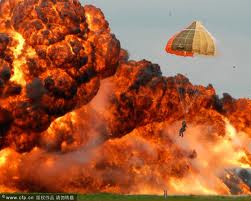
American air-power at work.

Even though every NATO member endorsed intervention in Libya, more than half have not contributed anything at all to the effort. Even the NATO allies that did deploy aircraft to Libya are sometimes placed under severe restrictions by their home countries that limit their usefulness. For example, many allies deploying aircraft to Libya only authorize their air forces to enforce the no-fly zone and not conduct any bombing at all. This means that they may shoot down Libyan aircraft in the air. As there are no Libyan aircraft flying around anymore, that's not a very challenging task.


Mr. Gates sees a problem with this situation.

The question becomes, will the United States continue to provide the bulk of funding and military support for this alliance when the rest of the allies are not contributing an equal share of the budget? Given the current financial problems in the United States, it seems likely that NATO contributions will be one promising area to cut in the future.


After all, these things are expensive!

Conclusion
The contributions of NATO members to conflicts in Kosovo, Afghanistan, and Libya are certainly appreciated by the United States, but the unequal military contributions of the United States and the rest of the alliance will lead to tension in the future. It may reduce the importance of NATO or simply end the alliance altogether. Europe needs to take more responsibility for their own defense and not rely on the United States to take the lead in every major military action.


Particularly when a little bit of ocean separates the United States from the conflict zones in North Africa and the Middle East.

Friday, November 19, 2010

Missile Defense-A waste of effort

I was surprised to see that one of the successful results of President Obama's trip to Portugal was that NATO would support the construction of a missile shield over Europe. Since Ronald Reagan initiated the Strategic Defense Initiative during his presidency, the United States has spent well over $100 billion on attempts to create a successful missile defense program and has not had a great deal of success.


Emblem of the Strategic Defense Initiative

The ideas for defense against enemy ballistic missiles have been quite varied. Some have included modifying already existing antiaircraft systems-such as the Patriot missile launcher-to target and destroy incoming missiles. These systems were tested in the Gulf War against Iraqi Scud missiles with reports of some success. Unfortunately, this success was considered post-war to be the interception of only a few of the 40 Scuds launched by Iraq during the war. That isn't a great ratio if you're relying on this system to stop the destruction of a major city.


Patriot missile system in action

Another problem with these systems is that they have had issues with friendly fire, on several occasions they have shot down friendly aircraft that were misidentified as enemy missiles.


Oops

Another route that has been pursued is to have ships equipped with the AEGIS missile tracking system shoot down missiles before they are able to land. They have been involved in successful tests, but only against one or two missiles at the most. Again, if more than one or two missiles are launched, this system doesn't strike me as being likely to see much success.


AEGIS cruiser

Another approach that has been proposed is to have a system of satellites in orbit that can destroy enemy missiles with laser type systems. This was never seriously pursued, mostly just put out there as an idea. However, this is the main view that many had of missile defense around the time it was proposed, hence why the concept was derided as being "Star Wars."


Artist's rendition

Anyway, from the ideas that have been posed, ground and sea based systems seem to be the most successful. Unfortunately, their success rate is unlikely to be very high if more than a handful of missiles are launched at the same time. One massive problem to the concept of a missile shield is that Russia is estimated to have more than 3,000 strategic nuclear weapons along with an unknown number of tactical nukes. An additional problem is that at least a significant portion of these are designed to be delivered by bombers or by submarines, two methods that missile defense shields are not designed to defend against. Even if a system was able to achieve a 90% success rate of missile defense, that still leaves a few hundred nuclear weapons available, sufficient to destroy most of the United States and Europe.

On the other hand, the main goal of the proposed missile defense system in Europe is to stop an Iranian ballistic missile from being able to hit a major target. These systems are likely to have a much better chance of halting an attack like that. Personally I think the much greater deterrent is the fact that Iran would be turned into glass if they launched a nuclear weapon at all. I don't think any country in the world is insane enough to make a nuclear attack with the full knowledge that they would be utterly destroyed by the counter-attack. All that the missile defense system in Europe will accomplish is to antagonize Russia.


And you don't want to antagonize Russia

The potential benefits of a missile defense shield are not worth the price, which includes both money and foreign relations. The system has not been proven to have a great deal of success so relying on it does not make any sense. The possibility of widespread nuclear death has been around for decades and it has been successfully stopped through the use of a secret, high tech weapon.


Let's keep using it.